“Mom, I’m not going to my mother-in-law’s dacha,” Nadezhda said, gripping the phone so tightly her knuckles turned white.
She was standing on the balcony of her apartment, looking at the gray sky above the city, feeling everything inside her tighten into a hard knot. The conversation with her mother wasn’t helping. It only made the sense of hopelessness stronger.
“Nadyusha, she’s an old woman,” her mother’s voice sounded tired and conciliatory. “She’ll be seventy soon. It’s only for a few days. Igor is asking you.”
Nadezhda closed her eyes. Igor. Her husband, who was asking. Who always asked. Who never demanded anything from his mother, but constantly demanded from her—to understand, to endure, to give in.
“Mom, you don’t understand,” she said quietly, so Igor wouldn’t hear from the room. “She’ll start again. Those hints, those looks. I can’t take it anymore.”
She hung up and returned to the apartment. Igor was sitting on the sofa with his laptop, but he wasn’t working. He was staring at the screen, but she could see he was waiting. Waiting for her answer.
“Nadya, so what did you tell your mother?” he asked without lifting his head.
“I didn’t tell her anything. I listened to another lesson about patience.”
He sighed. She knew that sigh by heart. The sigh of a man caught between two fires. The sigh of a martyr.
“Mom needs help at the dacha. Digging the garden beds, repainting the fence. I can’t manage alone. Besides, she’s waiting for you. She keeps asking about you.”
Nadezhda wanted to say that her mother-in-law didn’t ask out of love. She asked to make sure Nadezhda was still there, still under control. But she kept silent. Arguments with Igor always ended the same way. He withdrew into himself, shut down, and she was left feeling guilty. Guilty that she couldn’t be the perfect daughter-in-law for his perfect mother.
A week later, they were driving to the dacha. Igor’s old car rattled along the broken road, while Nadezhda looked out the window and prepared herself. Prepared for a meeting she didn’t want. For a weekend that would become a test.
Anna Petrovna met them on the porch. Tall, straight-backed, with gray hair arranged in a flawless hairstyle. There was a smile on her face—warm, welcoming, almost sincere. Almost.
“Igoryok, my son! Finally! I’ve been waiting and waiting,” she said, hugging her son before turning to Nadezhda. “And I’m glad to see you too, Nadyusha. Come in, come in. Tea is on the table.”
The house greeted them with the smell of pies and freshness. Everything was perfectly clean, perfectly arranged. On the table lay an embroidered tablecloth and a porcelain tea set that was only brought out on holidays. Anna Petrovna had prepared.
They drank tea, and her mother-in-law talked about the neighbors, the weather, and how well the strawberries had grown. She spoke a lot, but her gaze kept sliding over Nadezhda. An appraising, studying gaze that made her want to hide.
“Nadyusha, you’ve lost weight,” her mother-in-law suddenly said, interrupting her story about the new currant bushes. “Or does it just seem that way to me?”
“I look fine,” Nadezhda replied, trying to smile.
“No, no, you’re too thin. Igor, do you feed your wife?” her mother-in-law turned to her son, a note of reproach entering her voice. “I taught you to take care of your family.”
Igor laughed awkwardly.
“Mom, what do I have to do with it? Nadya takes care of herself.”
“That’s exactly the problem—herself,” Anna Petrovna shook her head. “A wife should think about her husband, not about herself. At your age, I had already raised three children and still always looked immaculate.”
Nadezhda tightened her fingers around her cup. It had begun. That slow, methodical dissection. Never direct, never openly. Always through hints, through comparisons with herself—young and perfect. That evening, when Igor went to the bathhouse and Nadezhda was washing dishes in the kitchen, her mother-in-law came over to her. She stood beside her, took a towel, and began drying the plates.
“Nadyusha, I wanted to talk to you,” she began quietly.
Nadezhda tensed. Here it was. The main conversation they had been invited for.
“My Igor is a special boy,” her mother-in-law continued, not looking at her. “I raised him alone. His father left early. I put my whole self into him. My whole life.”
Nadezhda stayed silent. Where was this going?
“And I worry very much about his happiness. About your happiness,” her mother-in-law put down a plate and turned to her. “You know I’ll be seventy soon, don’t you?”
“I know, Anna Petrovna.”
“So I keep thinking—what will be left after me? Who will get this house, this dacha? I’ve lived here all my life. I arranged every corner with my own hands.”
Nadezhda felt cold inside. She understood where the conversation was going.
“I want all of this to go to Igor,” her mother-in-law said more confidently now. “But you know, the laws are so complicated these days. Notaries, documents. I consulted someone, and they told me I should draw up a deed of gift. Now, while I’m still alive.”
Nadezhda placed a cup in the drying rack. Her hands were trembling.
“Anna Petrovna, that is your decision.”
“That’s what I thought too,” her mother-in-law smiled. “There is only one issue. If I transfer it to Igor, then half of it will automatically go to you. By law. You are married, after all.”
Silence hung between them. Nadezhda waited for her to continue, though she already understood everything.
“I don’t want to offend you, Nadyusha. You’re a good girl. But this is family property, you understand? It came to Igor from his father, from his grandfather. It must stay in the family. In his family,” her mother-in-law paused. “I would like you to sign a waiver. Voluntarily. That you make no claim to this property.”
Nadezhda slowly turned to her mother-in-law. The woman stood with her arms crossed over her chest, watching expectantly. There was no malice or triumph on her face. Only the calm confidence of a person who knew she would get what she wanted.
“You want me to give up my rights to inheritance? In advance?”
“Not to inheritance, Nadyusha. To something that doesn’t belong to you. You understand—it isn’t yours. You joined our family three years ago. This house was built over decades.”
“Does Igor know about this conversation?”
Her mother-in-law smiled. Softly, almost tenderly.
“Igor is a kind boy. He wouldn’t burden you with such matters. But I am his mother. I have to think about the future. His future.”
Nadezhda left the kitchen without answering. She crossed the veranda, went down the porch steps, and walked through the yard without looking where she was going. Everything inside her was boiling. Not even from hurt. From understanding. Understanding that for this woman, she had never been part of the family. She was a temporary guest who could be tolerated, but not trusted. Someone who could not be allowed into the sacred core—family property.
She found Igor in the bathhouse. He was sitting on the bench, red from the steam.
“Igor, come out. We need to talk.”
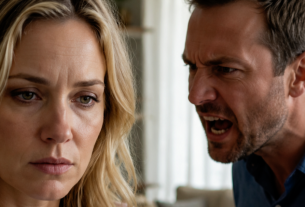
He came out a minute later, throwing on a robe. They stood by the pond, and Nadezhda spoke. She spoke evenly, without shouting, but every word was an accusation.
“Did you know? Did you know she was going to ask me to sign a waiver?”
Igor was silent. He neither denied nor confirmed it. He stayed silent and looked away.
“You knew,” Nadezhda repeated, and it was no longer a question. “That’s why you brought me here. Not to dig garden beds. So your mother could calmly put me in my place.”
“Nadya, you’re misunderstanding,” he finally said. “It really is family property. That doesn’t mean Mom doesn’t trust you.”
“She doesn’t trust me,” Nadezhda interrupted. “That’s exactly what it means. And you’re on her side. As always.”
“I’m not on anyone’s side!” he snapped. “I just understand her. She worked for this dacha her whole life. She wants it to stay in the family.”
“And what am I? Am I not family?”
He didn’t answer. And that silent answer was more eloquent than any words. She understood: to him, she was also an outsider. Loved, desired, but an outsider. Not real family.
That night, Nadezhda didn’t sleep. She lay on the uncomfortable sofa in the living room—her mother-in-law, of course, had arranged for them to sleep separately, “so Igor would be more comfortable, he was tired from the road”—and stared at the ceiling. A decision was taking shape inside her. A cold, sober decision.
In the morning, she dressed, packed her things, and went out to breakfast. Anna Petrovna was busy at the stove, while Igor scrolled through his phone.
“Anna Petrovna, I will sign your waiver,” Nadezhda said calmly.
Her mother-in-law turned around, and triumph flashed across her face.
“That’s a good girl. I knew you would understand.”
“But on one condition,” Nadezhda continued. “I want the notary to come here. Today. And I want everything handled officially.”
“Why such a rush?” her mother-in-law asked in surprise.
“Because I want this matter closed once and for all. No more conversations.”
Anna Petrovna exchanged glances with her son. Igor nodded.
“Fine. I’ll call Maria Stepanovna, she’s our notary. I think she can come this afternoon.”
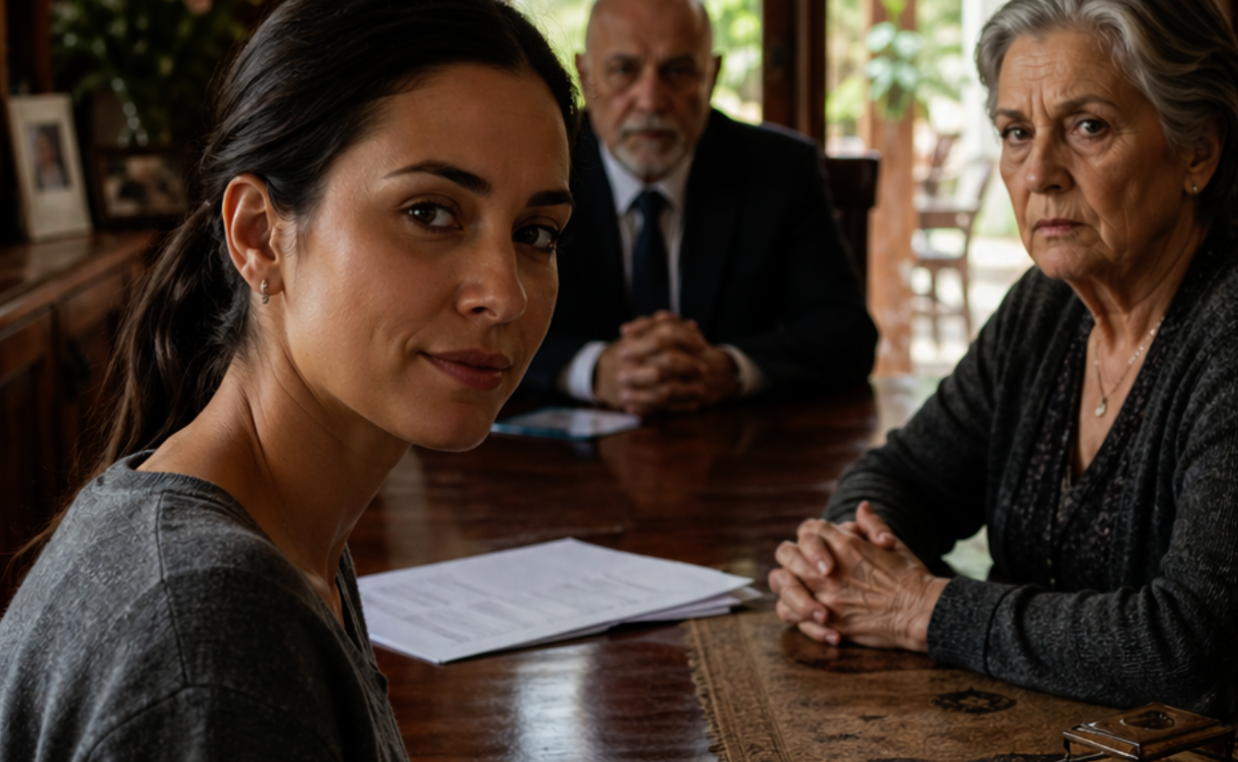
The notary arrived at four o’clock. She was a woman of about fifty, strict-looking, in a suit and carrying a briefcase. They settled in the living room.
“So,” Maria Stepanovna began, laying out the documents. “Nadezhda Sergeyevna, you voluntarily waive any claims to the dacha house and land plot belonging to Anna Petrovna Sokolova, should they be transferred into the ownership of your husband, Igor Vladimirovich Sokolov?”
“Yes,” Nadezhda said firmly. “But I want to clarify the conditions.”
The notary raised an eyebrow.
“What conditions?”
“I will give up the dacha,” Nadezhda said slowly, pronouncing every word clearly. “But in exchange, I want our city apartment transferred fully into my name. The one Igor and I currently live in.”
Silence fell. Igor turned pale.
“Nadya, what are you talking about?”
“Fairness,” she said, turning to him. “Your mother wants to protect family property from a strange woman. I also want to protect my property. The apartment was bought during our marriage, with shared money. I have a right to it.”
Anna Petrovna jumped to her feet.
“How dare you?! That apartment belongs to Igor!”
“Our apartment,” Nadezhda corrected her. “By law. Just like this dacha would have become half mine if you transferred it to Igor. You said so yourself.”
Maria Stepanovna coughed.
“Technically, Nadezhda Sergeyevna is right. An apartment acquired during marriage is joint property. If she wants to have her share allocated and transfer the whole apartment into her name, Igor Vladimirovich will have to sign his consent.”
Igor looked at Nadezhda as if she were a stranger.
“You want to take my apartment away from me?”
“I want to have something of my own,” she replied. “If I’m not family, then I need a guarantee. You sign away your share of the apartment, and I’ll sign away the dacha. Fairly.”
“This is blackmail!” her mother-in-law shouted.
“This is your logic, Anna Petrovna. You taught me to protect what’s mine. So I’m protecting it.”
Maria Stepanovna gathered up the documents.
“I cannot formalize any transactions in an atmosphere of conflict. If you decide to act in a civilized manner, come to my office. Goodbye for now.”
The notary left. The three of them remained. Anna Petrovna was crying quietly, sobbing into a handkerchief. Igor sat with his face buried in his hands. Nadezhda stood by the window, looking at the garden that would never be hers.
“I’ll leave tomorrow morning,” she said. “There’s a bus at seven.”
“Nadya,” Igor lifted his head. “Can’t we discuss this?”
“Discuss it?” she turned to him. “We’ve been discussing it for three years. Every time your mother hinted that I wasn’t good enough. Every time you stayed silent and didn’t defend me. I’m tired of discussing it, Igor. I’m tired of being a stranger in my own husband’s family.”
She went into the living room and closed the door. She lay down on the sofa and covered herself with a blanket. Behind the wall, muffled voices could be heard—her mother-in-law was saying something to her son, and he was answering. But Nadezhda no longer cared.
In the morning, she woke up early. She packed her bag and got dressed. The house was quiet; everyone was still asleep. She stepped onto the porch, went down the stairs, and walked toward the gate. The sun was just rising, and dew glittered on the grass.
“Nadezhda!”
She turned around. Igor was running after her, barefoot, wearing only trousers and a T-shirt.
“Wait. Don’t leave like this.”
She stopped.
“How should I leave, Igor?”
He came closer, breathing heavily.
“I don’t want you to leave. I love you.”
“But not enough,” she said quietly. “Not enough to choose me. Not enough to protect me from your mother. Not enough to tell her: this is my wife, and she is part of this family.”
“I’ll tell her! I’ll tell her! We’ll fix everything,” he said, grabbing her hand.
Nadezhda pulled her hand free.
“It’s too late, Igor. You should have said that three years ago. When we got married. Not now, when I was forced to set conditions myself.”
She walked toward the gate. She didn’t look back. She heard him standing on the path, but he didn’t call out again. And that was right. Because there was no one left to call. The Nadezhda who had been ready to endure and wait had stayed behind in that house. Another woman left instead. One who had understood a simple truth: family is not where you are tolerated. Family is where you are accepted.
A month later, they finalized the divorce. Quietly, without scandals. The apartment stayed with Igor, the dacha with Anna Petrovna. Nadezhda rented a small studio on the outskirts of the city. She started life over. Without a mother-in-law, without a husband who had been unable to choose. But with a sense of self-respect that turned out to be worth more than any inheritance.
Sometimes she remembered that night at the dacha. How she had lain on the sofa and made her decision. How she had understood that dignity cannot be bought; it can only be preserved. And that it is better to remain alone than to spend your whole life proving to another woman that you have the right to be called family.
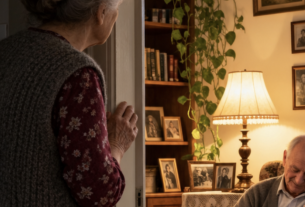
Her mother-in-law called Igor every day. She asked how he was, whether he was hungry, whether he needed help. He answered in monosyllables. And in the evenings, he sat in the empty apartment and stared at his phone. At a photo where he and Nadezhda were laughing in the park. That had been before his mother started the conversation about inheritance. Before he failed to find the words to stand up for his wife. Before he realized that silence is also a choice. And he had chosen the wrong thing.
Anna Petrovna died two years later. The dacha, as planned, went to Igor. He came there in the spring, opened the house, and walked through the rooms. Everything was in place, everything was clean, but empty. He sat down on the veranda and suddenly felt tears rolling down his cheeks.
He was not crying for his mother.
He was crying for the life he had lost. For the wife who had wanted to be part of the family, but never became one. Because he had not allowed her to. Because he had chosen a house over a home. Property over love.
And now he had a dacha, but no family.