“Ingочка, is everything all right?”
Rimma Pavlovna turned to me with a glass of sparkling wine in her hand, smiling so broadly as if life had truly worked out for her. A sea-green dress, large earrings, a new handbag — clearly not cheap.
I was standing beside her table, and the music in the hall gradually began to fade.
“Rimma Pavlovna, when are you going to return our money — the 950,000 euros you took for Alina’s kidney transplant, even though her government-funded quota had been approved six months ago?”
The smile slid off her face like a mask. Someone at the next table choked. The bride froze with her glass in her hand. Egor grabbed me by the elbow.
“Have you lost your mind?”
I didn’t answer. I simply looked at my mother-in-law and waited.
Six months earlier, Rimma Pavlovna had come to our place in the evening without calling first. She sat down in the kitchen, took off her shoes, and said that Alina, Egor’s cousin, urgently needed a kidney transplant. The clinic, the donor — everything was ready. The only thing missing was the money.
“How much?” Egor asked.
She was silent for a moment, then exhaled.
“Nine hundred and fifty thousand euros.”
I put the kettle back on the stove. That was all our savings. For five years, we had been saving for a townhouse. I had received a bonus, we had put money aside every month, denying ourselves vacations. And now, with one sentence, everything was collapsing.
“That’s for the house,” I said quietly.
“Ingochka, I understand. But this is someone’s life. Alina is Egor’s family. We’ll return everything as soon as the insurance pays the compensation. Three months at most. I’ll give you a notarized promissory note.”
Egor looked at me as if I had already refused.
“Inga, we can’t turn our backs on her. She’s our blood.”
Everything inside me screamed: don’t do this. But how do you say no when someone’s life is at stake? I nodded.
“Only with a written note. Notarized. With an obligation to return it in three months.”
Rimma Pavlovna nodded so quickly that her earrings trembled.
“Of course, of course! Thank you, children. You’re saving Alina.”
Three months passed. Then four. Rimma Pavlovna wouldn’t answer the phone, and when she did, she said the same thing:
“Alina has complications. The insurance company is dragging things out — you know what bureaucracy is like. Just a little longer, Ingochka.”
Egor defended her.
“My mother wouldn’t deceive us. What do you think, that she’d cheat us?”
I kept silent. Until I ran into the real estate agent who had once shown us luxury apartments. He recognized me and smiled.
“Your mother-in-law is something else! Made up her mind quickly and closed the deal.”
The world tilted. I stood in the middle of the street and couldn’t breathe.
Egor didn’t believe me.
“The agent was mistaken. It was some other Rimma Pavlovna.”
“Egor, he said your surname. The address. Your mother’s full name and patronymic.”
“You’re going crazy with suspicion.”
So I called my father.
Vladimir Sergeyevich was a lawyer. Hard, methodical. He had never liked Egor. When I told him about the money, he didn’t lecture me. He simply said:
“Give me a week.”
A week later, he came over with a folder.
“Alina really is waiting for a transplant. But under a state-funded quota. The money was allocated six months ago. Rimma Pavlovna bought an apartment with your funds. Here’s the registry extract. We have everything we need for court.”
I sat on the sofa, staring at the papers, unable to move. Egor stood by the window. He was silent for a long time. Then he turned around.
“I don’t believe it. My mother couldn’t have done that.”
“Egor, here are the documents.”
I held out the folder. He didn’t even take it.
“You want to destroy my family. You’ve always hated her.”
I got up and left the room. There was nothing more to say.
At the wedding, Rimma Pavlovna was sitting in the front rows, accepting congratulations, telling everyone about her new apartment. Everyone admired her. How brave of her, they said, to make such a decision at her age.
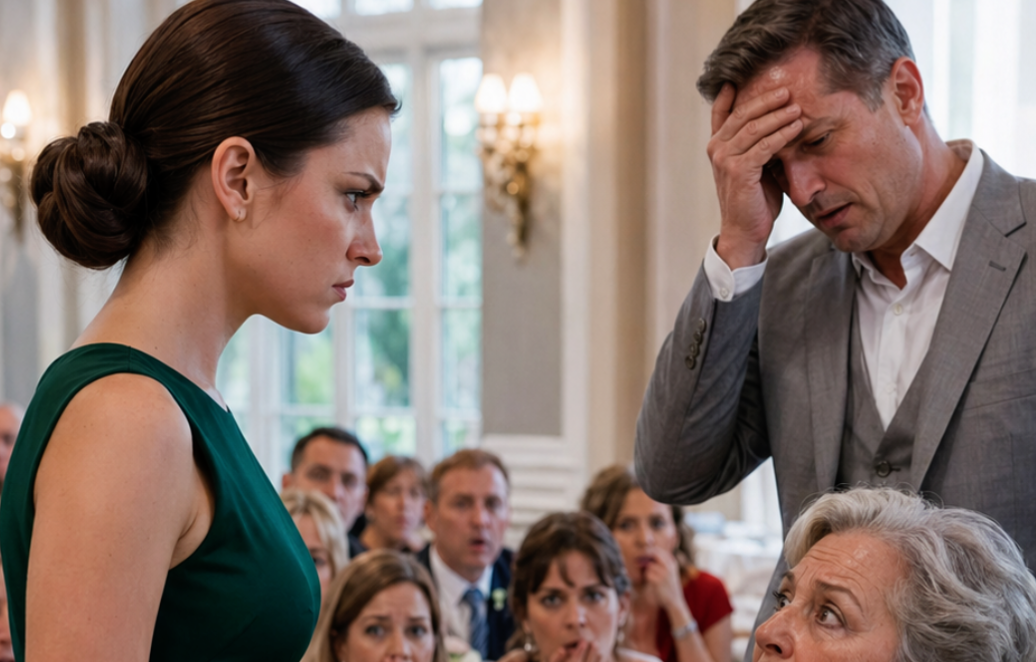
I stood up and walked over to her table. The music faded. Rimma Pavlovna turned with a smile. I asked the question.
The silence was so deep you could hear someone cough near the exit.
“Inga, what nonsense are you talking about? What quota?”
Vladimir Sergeyevich rose from the neighboring table. He came over with the folder and opened the documents.
“Rimma Pavlovna, here is the notarized promissory note. Here is the registry extract. You bought an apartment two weeks after receiving the money. Here is the hospital certificate: Alina was granted a state-funded quota. If you don’t return the money, I will file a fraud complaint and have your apartment seized.”
Rimma Pavlovna opened her mouth, but no words came out. Her friends sat with their eyes wide. The bride froze. Egor jumped up and grabbed my hand.
“Inga, stop it! You’re disgracing us!”
I pulled my hand free.
“I’m not the one causing disgrace. Your mother stole our money and bought herself an apartment while I believed I was saving someone’s life.”
Rimma Pavlovna clutched her handbag. Her face was white, her lips trembling.
“I don’t owe you any explanations! This is a family matter!”
Vladimir Sergeyevich stepped closer.
“This is a criminal matter. Either you return the money, or there will be a trial and seizure of property.”
Rimma Pavlovna turned around and hurried toward the exit. Her heels clicked against the parquet floor, and the guests stepped aside. No one watched her with sympathy. Everyone was silent.
Egor stood beside me, clenching his fists. Then he looked at me as if I had betrayed him.
“You did this on purpose. At a wedding.”
“Yes. On purpose. Because otherwise you wouldn’t have believed me.”
He turned away and went after his mother.
The next day, Rimma Pavlovna transferred the money. Every last cent. My father said she had taken out a loan secured against the new apartment. Now she would be paying it off for years.
Egor came back that evening. He sat in the kitchen and said nothing. Then he said:
“She returned the money. Happy now?”
I sat across from him.
“No. I’m angry. Because not once did you take my side. You defended her until the very end, even when there was proof.”
He stared at the table.
“She’s my mother.”
“And I’m your wife. But you chose her lie over my truth.”
He didn’t answer. He just sat there in silence. And I understood that it was over. Not because of the money. Because he had been unable to choose me.
A month later, I filed for divorce. Egor didn’t resist. He signed the papers silently, packed his things, and went to his mother.
I found a townhouse. Small, with south-facing windows and a plot of land. I registered everything in my own name. No co-owners, no other people’s signatures. Only my name on the documents.
When I moved in, it was quiet. I sat on the windowsill, looked at the empty rooms, and thought that, finally, I could breathe. Without looking over my shoulder. Without fear that someone would deceive me again and I would be blamed for not believing them.
Rimma Pavlovna never called again. Neither did Egor. I heard from acquaintances that he remarried a year later. To a woman his mother approved of immediately. Quiet. Compliant.
I wasn’t jealous.
Sometimes in the evening, I sit on the terrace, drink dry red wine, and watch the sunset. I think about how many years I wasted trying to be convenient. Trying to believe. Trying not to ask unnecessary questions.
Now I ask them. And if I don’t get an answer, I leave. Without explanations, without tears, without trying to save something that has already rotted away.
The money came back. The house was bought. Rimma Pavlovna is paying off her loan and avoiding meetings with former friends who remember everything. Egor lives with his new wife and probably still thinks I was wrong.
Let him think so.
I know something else: sometimes the only way to get back what is yours is to stand up in the middle of a wedding and ask out loud what everyone else is silent about.
I asked.
And my mother-in-law stopped laughing.